
Because it is laid out in columns, this site doesn't display properly on a phone held vertically.
Please turn it sideways.
Because it is laid out in columns, this site doesn't display properly on a phone held vertically.
Please turn it sideways.


44 years on still mostly relevant and valid, and a model of good guidelines.

44 years on still mostly relevant and valid, and a model of good guidelines.
The late 1970s was a productive era for research into information design. In 1978 the US government funded the Document Design Project, a major project to improve the quality of public information.1
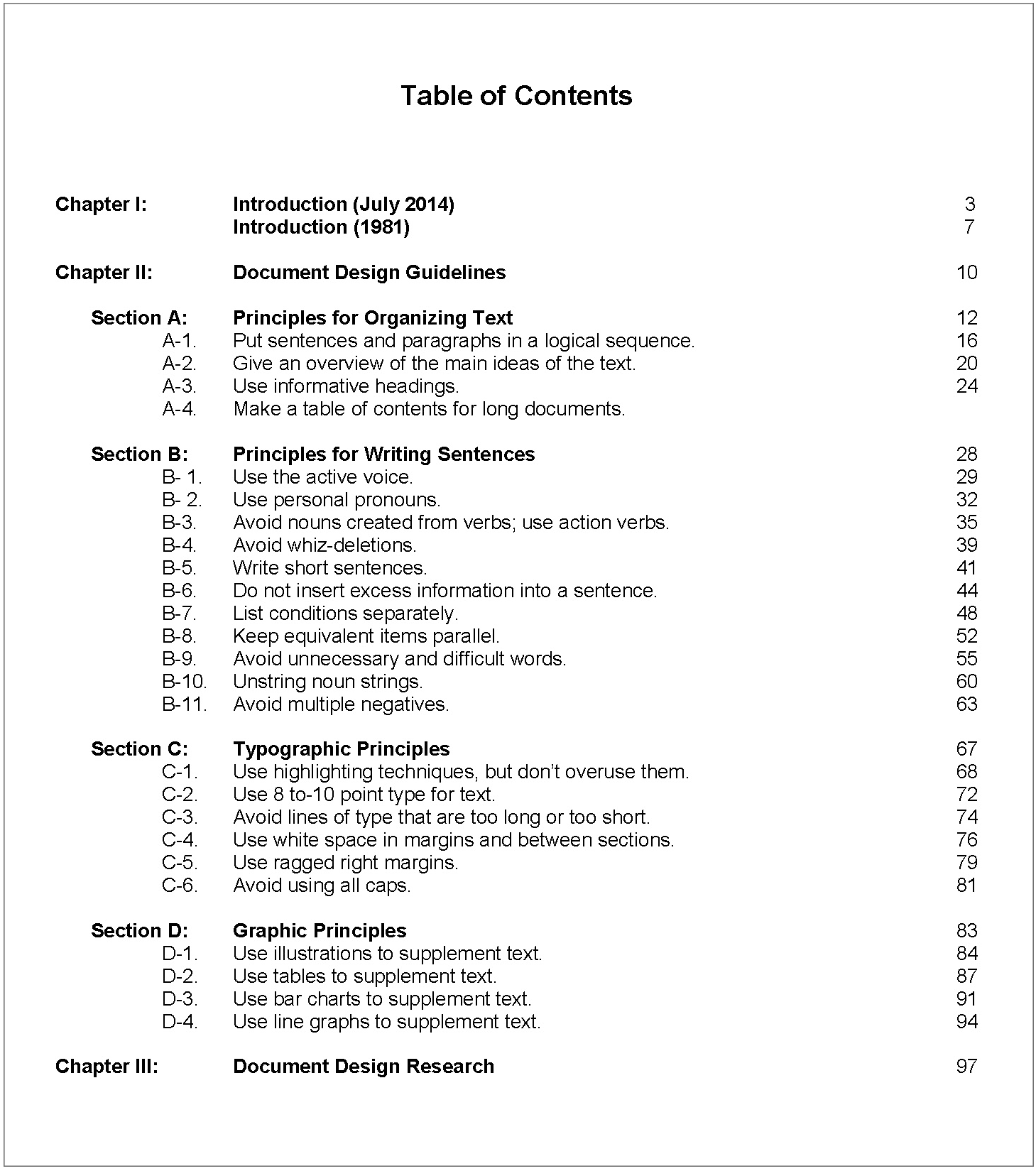
Guidelines for Document Designers was one of their products.2 It restricts itself to just 25 topics covering clear language and some basic design guidelines.
I love its honesty and intelligence. It takes trouble to explain each guideline, show examples, and cite relevant research (and sometimes to admit that they couldn’t find much).
Best of all, it includes qualifications – it tells you when there are exceptions to the guideline.
In 2014, Ginny Redish (who directed the project and co-wrote the guidelines) made them available online3 and added a new introduction, where she explained that
Guidelines are not rules. Applying them takes judgment, and Guidelines for Document Designers tries to help you with that judgment. For example, “Use the active voice” is one of the guidelines, as it is in every handbook of clear writing. But knowing when the passive voice might be more appropriate is just as important as preferring the active voice.
1. It was run by the American Institutes for Research, and the English and psychology departments at Carnegie Mellon University (I believe the graphic design department declined to participate, which is a great pity). The design consultancy Siegel+Gale were also involved.
2. Daniel B Felker, Frances Pickering, Veda R Charrow, V Melissa Holland, Janice C Redish. (1981) Guidelines for document designers. American Institutes for Research.
3. https://redish.net/wp-content/uploads/Guidelines_for_Document_Designers_2014.pdf